ALBUM - View my Belgian Occupation of Eupen & Malmedy album
Fast Facts
Region: Western Europe
Group: Post WW1 Occupations
Classification: Military Occupation
Prior Regime: German Empire
Key Dates:
1918 - British occupy Eupen and Malmedy
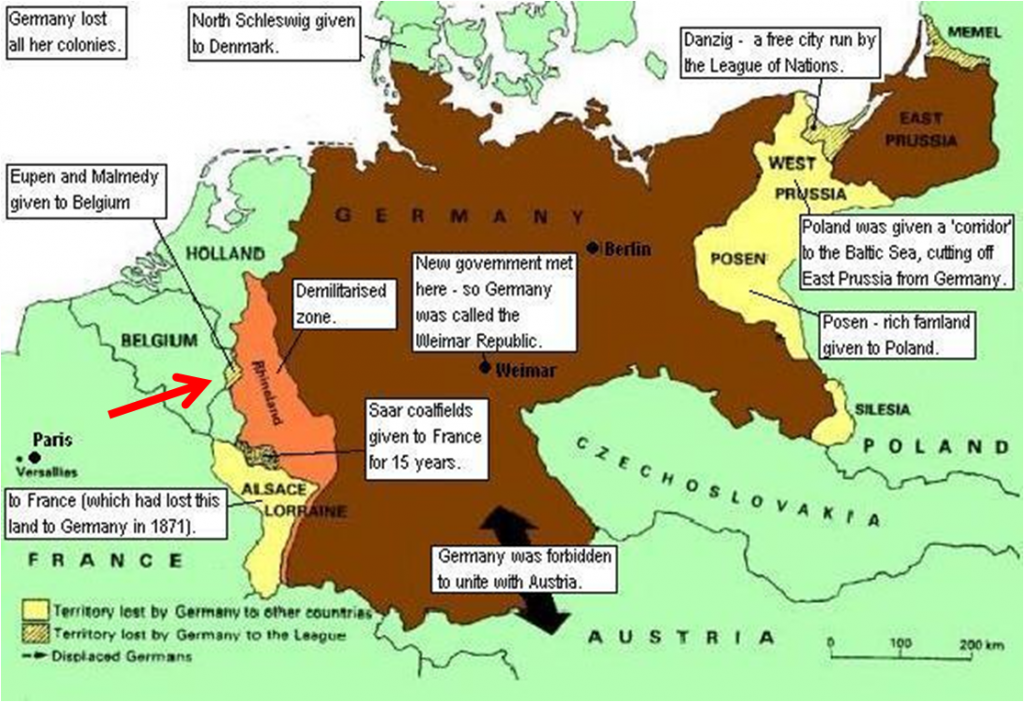
1919, Jun 28 - Eupen and Malmedy ceded to Belgium under Treaty of Versailles
1920, Jan 26-Jul 23 - "Plebiscite" held on whether to return territories to Germany
1920, Sept 20 - Eupen, Malmedy and Sankt-Vith annexed by Belgium
1925 - Eupen, Malmedy and Sankt-Vith fully incorporated into Belgium
Following Regime: Separate areas of Eupen and Malmedy
Scott Catalogue: (Germany, Occupations) 1N18 - 1N24
Pick Catalogue: none
Currency: 100 Pfennig = 1 Mark
History
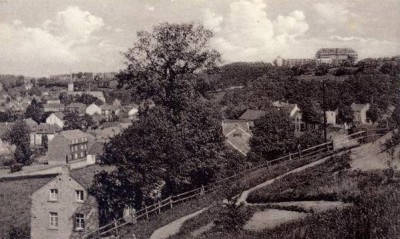
Eupen and Malmedy (the East Cantons), were districts of the German Empire which were awarded to Belgium in 1920 in the Treaty of Versailles. Historically, there have been little in common between these areas, Eupen is a German speaking region with historic ties to the Habsburgs of Austria and the German Empire, and Malmedy is a French / Walloon speaking district with historic ties to the Duchy of Luxembourg. Both districts were awarded to Prussia, and later the German Empire at the Congress of Vienna in 1815.
At the beginning of World War I, most of the inhabitants of the Eupen and Malmedy districts considered themselves German and fought for the German Empire during the war. As World War I began to draw to close, the Allies conducted negotiations regarding the breakup of the German Empire, and allocation of territories among the victors. The French government was a strong advocate for the expansion of Belgium and supported their claim to reunite the “lost” cantons of Eupen, Malmedy and Sankt Vith to Belgium. This was ratified in 1920 in the Treaty of Versailles and they went to Belgium on a provisional basis. The five year transition was to include a plebiscite (or vote) by the residents on whether they would remain as a part of Belgium.
The plebiscite was held between 26 Jan and 23 Jul, 1920. However it was not a secret ballot and inhabitants of the cantons who objected to the annexation had to register (by name) at the village hall. This procedure led to mass intimidation; people were led to believe that anyone objecting to annexation by Belgium would not receive Belgian nationality, but be deported to Germany or at least have their food ration cards taken away. As a result, only 271 people out of 33,726 voted for the region to return to Germany. In 1925, Eupen, Malmedy, and Sankt Vith, fully became part of Belgium.
The very next year, in 1926, Belgium and the German Weimar Republic held secret meetings to discuss the return of the East Cantons to Germany in return for 200 million gold marks. When the talks were discovered, this infuriated the French, and talks were quickly concluded with no agreement.
In 1940 as World War 2 was ramping up, Nazi Germany occupied and annexed the East Cantons back into Germany. Many of the German speaking inhabitants supported the move; however that support dropped significantly when the German Army conscripted most of the male population into the military and most were sent to the Eastern Front. After the war, Belgium reclaimed their sovereignty over the region.
Stamps
 ALBUM
ALBUM
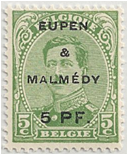
On 15 Jan, 1920, within the Eastern Cantons, seven stamps from the 1915 Belgian definitive series were overprinted "Eupen & Malmedy" and surcharged in German currency. The first 5 stamps of the series, which featured the image of King Albert I, were overprinted and surcharged in black. The last two, which featured views of Belgian cities, were overprinted and surcharged in red..
These stamps were replaced on 20 Mar, 1920, with stamps overprinted (but not surcharged in German currency) individually for Eupen and Malmedy.
Banknotes
German currency initially used, but quickly changed to Belgian currency.
Links
Eupen - Malmedy at Wikipedia
Eupen and Malmedy at Belgium Stamps





5 Responses to Eupen & Malmedy, Belgian Occupation - post ww1 (1919 - 1920)